Training Alone at Home: Safety and Spotters Without a Gym Buddy
A missed bench press with no one in the room can pin a loaded bar across your chest. For anyone training alone at home, that single fact shapes which exercises you can push hard and which need a different plan. Most of your programme is fine solo. A few specific lifts are not.
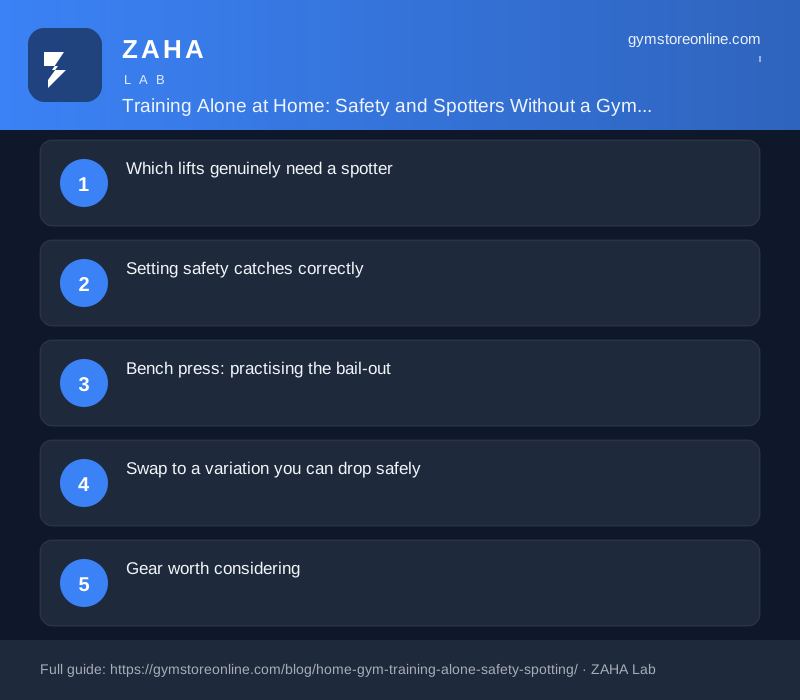
Which lifts genuinely need a spotter
The barbell back squat and the flat barbell bench press carry the most risk when training without a partner. Both put a loaded bar somewhere difficult to escape from under a genuine failure. The overhead press is more forgiving: miss a rep and you lower the bar to your chest, then step back. Deadlifts need no spotter at all. The bar goes to the floor. Romanian deadlifts, rows, lunges, and most dumbbell movements sit comfortably in the safe-to-go-alone category.
Setting safety catches correctly
Most home trainers set their safety bars too low. For squats, the pins should sit roughly 2 to 3 centimetres below the depth you reach at the bottom of a clean rep. Test this without weight first: take the bar out, squat to your normal depth, and mark the height against the uprights. Load up only once you are sure of the setting.
Train inside the rack, not in front of it. Standing outside the cage for a back squat looks tidier but makes the safety catches completely useless. A full power cage gives you more adjustment points than a two-post squat stand, and that range matters when you are dialling in the right pin height. The squat rack buying guide covers what to look for when choosing between cage styles for a home setting.
Bench press: practising the bail-out
Set the bench safeties at a height where you can rest the bar on the pins, roll it to your sternum, and slide your body out. Practice this with an empty bar before you work up to any serious load. It feels slightly awkward the first time. By the third or fourth run it becomes automatic. Never bench press on a flat bench with no rack or catches when you are alone.
Swap to a variation you can drop safely
Dumbbells remove most of the bail-out problem. A failed dumbbell press ends with the weights dropped to each side; you sit up. A failed goblet squat ends with the weight placed on the floor. No bar pinning you. For most home trainers working below a true one-rep maximum, dumbbell variations cover the same movement patterns with far less structural risk. The home gym injury prevention guide goes into this in more detail.
Gear worth considering
The equipment below suits a solo home setup or makes an existing one safer.
- Adjustable barbell and squat stand: a full barbell setup with adjustable J-hooks and safety catches, suitable for squats, overhead press, and bench once a bench is added.
- Selector-style adjustable dumbbells: fast weight changes and a compact footprint, practical in a spare room or flat where floor space is limited.
- FEIERDUN adjustable dumbbell set of 2: a lighter-duty option suited to smaller spaces where storage matters as much as the training itself.
- Treadmill and equipment floor mat: protects your floor from dropped weights and reduces vibration transfer to rooms below, useful in flats.
Browse the full range at Home Gym Equipment if you are building out a complete home setup.
Phone placement and telling someone you are training
Put your phone somewhere you can reach from the floor. A handset on a shelf three metres away is useless if you are under a bar you cannot move. Place it on the mat next to you, or clip it to an upright if your rack allows. Beyond that, tell someone before a heavy session. A quick text saying 'training now, back by 8pm' takes ten seconds to send. If you do not check in on time, they check on you. Simple, free, and worth doing every time.
Leaving one or two reps in reserve on heavy compound lifts is a sound approach when training alone. You do not need to train to failure to build strength. Consistent effort at around 80 per cent of your maximum produces solid results over time. Save near-limit attempts for movements where a missed rep has a clear, safe exit.
Frequently asked questions
Can I bench press alone at home without a power cage?
You can, but only if you have a rack with safety catches set at the correct height and you have practiced the bail-out technique with an empty bar. Benching on a flat bench with no rack or safety bars when you are alone is not advisable, because a missed rep at a serious load has nowhere to go.
How do I know if my squat rack safety bars are at the right height?
Take the bar out of the rack unloaded and squat to your normal depth. The safety pins should sit 2 to 3 centimetres below that position. Test the bail-out by lowering yourself under the empty bar and confirming you can stand with the bar resting on the catches before you add any weight.
Is it safe to deadlift heavy without a spotter?
Yes, the deadlift is one of the safest barbell lifts to train alone because the bar starts and finishes on the floor. If you fail a rep, you simply lower the weight back down. No spotter is needed for conventional or Romanian deadlifts in a home setting.