
SPORTNOW Adjustable Weight Bench with Bench Press Rack, Home Gym Bench | Leg Extension, Preacher
£127.99
View on Amazon →
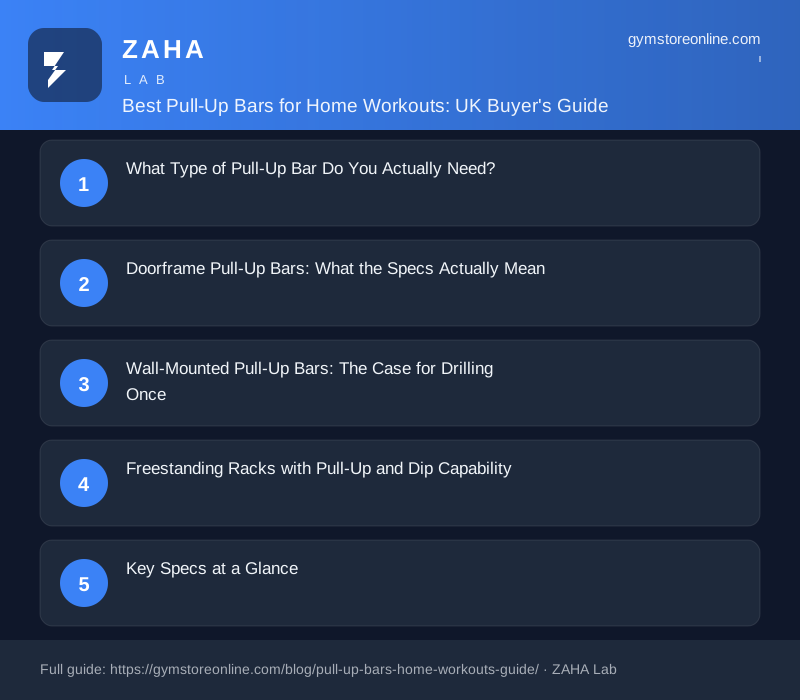
Published 17 September 2026 · updated 2026-09-17 · by GymStoreOnline
Most people pay for a gym membership just to use a pull-up bar — one piece of kit that can drive serious back and arm development with zero monthly fees. The best pull-up bar for home workouts depends on your wall type, bodyweight and available space: doorframe bars suit renters and beginners, wall-mounted bars handle heavier loading and dynamic movement, and freestanding power racks bring pull-up capability into a full home gym setup.
The market splits into three categories: doorframe bars (no drilling, lower capacity), wall-mounted bars (drilled, high capacity and rock solid) and freestanding racks or power cages that include a pull-up bar as part of a wider station. Each suits a different situation, and buying the wrong type is the single most common mistake.
Renters who cannot drill and weigh under 85 kg: a doorframe bar is a sensible starting point. Homeowners or longer-term renters with accessible brick, concrete or timber-stud walls: wall-mounted gives you permanence and a meaningful safety margin. Anyone building a home gym who wants to combine barbell work, bench pressing and pull-ups in a single footprint: a freestanding rack covers all three and usually costs less than buying the equipment separately.
Budget plays a role too. Doorframe bars typically run £15–£35. Wall-mounted bars cost £30–£80. Freestanding squat racks start around £50 and offer considerably more total functionality per pound spent.
Doorframe pull-up bars use either tension (no screws, grips the door surround by spring pressure) or a bracket that hooks over the top of the frame. Both need a standard doorframe — typically 60–90 cm interior width — with at least 6–8 cm of flat surface on the door surround for the bar to seat properly.
Weight capacity: Most tension-style bars are rated 100–130 kg. This applies to static hanging — your bodyweight held still. Dynamic movement such as kipping pull-ups or jumping to the bar generates peak forces well above your static weight. Anyone over 80 kg who trains with momentum should treat a doorframe bar as a stopgap at best, not a long-term solution.
Grip positions: Budget models offer three or four options — wide overhand, shoulder-width overhand, narrow underhand. Mid-range models add parallel neutral-grip handles, which reduce stress on the wrists and shoulders. If you have any existing joint niggles, the neutral grip is worth a small premium.
What to measure first: Check your doorframe's interior width against the bar's stated range. Check the moulding profile — ornate or thick architrave can prevent the bracket from seating flat. Verify the door type: hollow-core doors flex under load and should never be used as a mounting point. Most manufacturers list minimum and maximum dimensions clearly; use them before buying.
Foam sleeves on doorframe bars wear down over time, especially with dynamic training. Once the foam compresses, the steel bracket can mark painted or varnished wood. Fit a short strip of self-adhesive rubber beneath each contact point before first use — it adds months to the door finish without affecting bar stability.
A bar screwed into masonry or timber studs is stable, silent and typically rated 200–300 kg or more. It does not flex, does not shift under kipping, and handles dip belts loaded with plates without issue. For anyone serious about upper-body training at home, this is the right category.
The outlay is modest — most decent wall bars cost £30–£70 — but installation takes 30–60 minutes and requires the correct fixings for your wall substrate. Masonry walls need expansion anchors or M8 rawlbolts into the brick, not just the render. Timber-stud walls need fixings that reach the studs (use a stud finder), not just the plasterboard. A poorly fixed bar is a serious injury risk; follow the supplied fixing schedule exactly, or ask a competent person to fit it.
Projection: A bar sitting 20–25 cm from the wall lets you hang vertically with your back straight. Less projection forces your shoulders forward on the descent; more projection puts greater leverage on the fixings. Always check this measurement in the product listing before buying.
Fold-flat models: Some wall bars fold flush when not in use, which is useful in a tight room. Check that the folding pivot has no play before committing — loose pivots develop dangerous slack over repeated load cycles and are not always easy to identify from listing photos alone.
If drilling is ruled out and you want more than a single bar, a freestanding squat rack or multi-function station often includes pull-up and dip capability as part of the structure. Plan for a footprint of at least 1.2 × 1.0 m, plus a clear metre on all sides for safe movement.
The TOTEBOX Adjustable Squat Rack Barbell Stand (£56.99, 4.6 stars) includes a push-up bracket, spotter arms and a dipping bar alongside the barbell stand — giving you upper-body pressing, pulling and dipping without a separate station. It is a compact choice for anyone who also wants barbell squats or bench press at home.
The Yaheetech Adjustable Squat Rack (£49.98, 4.4 stars) is described as multifunctional, with a functional dip station and power bench support built into the heavy-duty barbell stand. At under £50 it sits at the entry point for racks with genuine dip and pull-up functionality.
For a more integrated package, the HOMCOM Adjustable Weight Bench Press Barbell Rack Dip Station (£65.99, 4.4 stars) is foldable and covers bench press, barbell rack and dip station movements in a single freestanding unit designed specifically for home gym use — a practical option when floor space matters.
The SPORTNOW 420KG Weight Bench with Adjustable Bench Press Rack and Dip Station (£83.59, 4.4 stars) steps up to a 420 kg rated frame and adds flat or incline bench configurations alongside the dip station, making it useful for anyone programming both pulling and pressing through one station rather than buying two separate pieces of equipment.
A "420 kg frame rating" refers to the total structural load the frame can bear — not the weight you will lift on any single function. Always verify that the dip or pull-up function carries its own rated capacity in the product documentation, separate from the overall frame figure. Dynamic loading from kipping or weighted dips applies peak force well above your static bodyweight.
| Feature | Doorframe (tension) | Wall-mounted | Freestanding rack |
|---|---|---|---|
| Typical capacity | 100–130 kg static | 150–300 kg+ | 200–420 kg (frame) |
| Drilling required | No | Yes | No |
| Grip positions | 3–5 | 4–8+ | 2–4 + dip station |
| Floor footprint | None | None | 1.2 × 1.0 m minimum |
| Best use case | Renters, beginners | Heavy users, kipping | Full home gym builds |
Bar diameter is worth checking. Standard pull-up bars run 28–32 mm, which suits the widest range of hand sizes and works with chalk and most gloves. Thick-grip bars (40–50 mm) increase forearm and grip demand — a deliberate training tool rather than a general-purpose choice.
Knurling: Smooth bars require chalk or gloves for long sets. Light knurling grips without tearing skin. Heavy knurling builds calluses quickly — appropriate if you train with chalk; uncomfortable without it. Most home-gym pull-up bars sit in the light-to-medium knurl range.
Our shortlisting process applies three consistent filters before any product is included:
Where a product carries a named structural standard — such as ASTM certification, as featured on several YOLEO bench systems — that carries more evidential weight than an anonymous "heavy duty" description. Where no certification is listed, we weight capacity claims more conservatively and look for corroborating detail in verified reviews.
A good fit if you:
Think twice if you:
A pull-up bar earns its keep well beyond standard pull-ups. Hanging knee raises, L-sits, straight-leg raises, active hangs for shoulder decompression and scapular shrugs all use the same bar. A £30 doorframe bar can replace a cable machine for lat development if used with consistent volume over time.
Progression is straightforward to track: log sets, reps and any added weight via a dip belt. Once you can complete three sets of ten clean pull-ups with bodyweight, adding 5–10 kg of plates provides a more sustainable overload stimulus than chasing endlessly higher reps.
For beginners who cannot yet complete a full rep: a resistance band looped over the bar and under one knee provides assisted reps in the exact movement pattern — a more effective progression tool than a lat-pulldown machine, because the motor pattern is identical to a full pull-up rather than an approximation of it.


Tension and bracket-style bars do not require screws, so no structural damage occurs to a solid door frame. However, the foam or rubber pads can compress over time and allow the steel bracket to mark painted or varnished wood — particularly during dynamic training. Fitting self-adhesive rubber strips beneath each contact point before first use significantly reduces the risk of surface damage.
Solid brick or concrete walls are the ideal substrate and accept standard expansion anchors or rawlbolts. Timber-stud walls work if fixings reach the studs — use a stud finder and verify that the stud depth is sufficient for the specified bolt length. Plasterboard-only walls cannot safely support the dynamic load of pull-up training without structural fixings into the timber frame behind the board.
For most home gym users, yes. Racks such as the TOTEBOX Adjustable Squat Rack Barbell Stand and the Yaheetech Adjustable Squat Rack include dip station and push-up capability alongside barbell support, covering the essential upper-body pulling and pressing movements. The pull-up bar height is fixed by the rack frame, which limits overhead clearance for gymnastics-style bar work but suits standard pulling exercises without issue.
As a working rule, choose a bar rated to at least 1.5 times your bodyweight for static training, or 2 times your bodyweight if you train with dynamic movement or a loaded dip belt. A 90 kg lifter doing kipping pull-ups should look for a minimum 180 kg rating — a figure typically only achievable on wall-mounted or freestanding options, not standard tension doorframe bars.
As an Amazon Associate we earn from qualifying purchases. Prices and availability are accurate as of the date shown and are subject to change — the price on Amazon at checkout is the one that applies.

Both cost under £30 and score 4.8/5. We compare the Sportneer and Amonax adjustable dumbbell sets for women to find which is worth
Find the best adjustable bench for ab and core workouts at home. UK guide covering angles, load ratings and picks under £100 for e
Everything you need to choose the best adjustable dumbbells for home workouts: weight range, locking mechanisms, build quality and