Olympic or 1-Inch Plates? Buying a Bar You Will Not Outgrow
Most home trainees buy a 1-inch standard bar and outgrow it within six months. For anyone aiming to squat or press more than around 60 kg, an Olympic barbell with 2-inch sleeves is the smarter starting point.
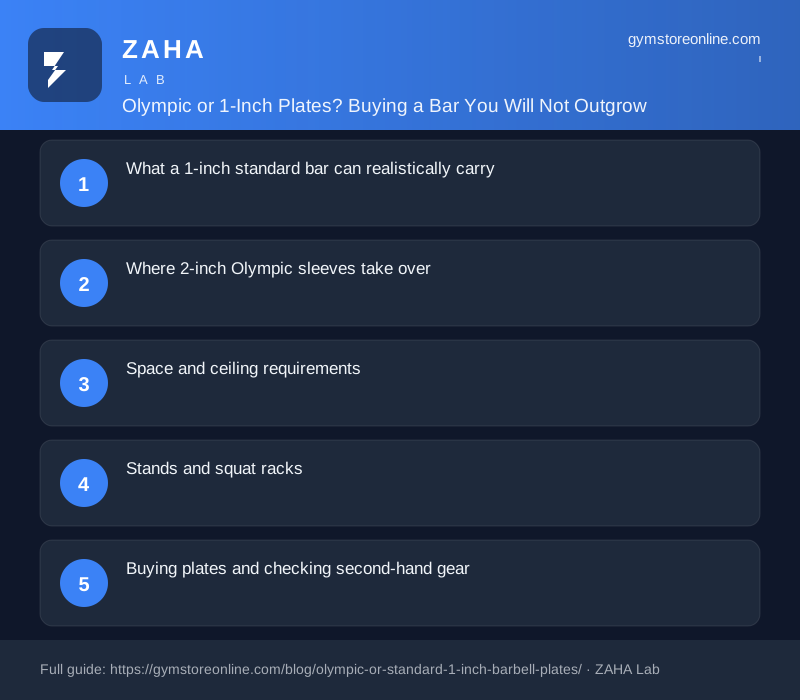
What a 1-inch standard bar can realistically carry
A typical 1-inch standard bar weighs 15 to 20 kg and carries a stated load rating of 100 to 150 kg. That sounds generous. The practical limit arrives sooner: vinyl plates are thicker per kilogram than cast iron, so a set advertised as "50 kg" can fill every centimetre of sleeve before 40 kg is actually on the bar. The spring collar clips that ship with most budget sets become unreliable above moderate loads. For a beginner doing light pressing or dumbbell work, a standard set is a reasonable entry point. For anyone running a linear progression on a squat, deadlift or bench press, the ceiling arrives quickly.
Where 2-inch Olympic sleeves take over
Olympic bars have 50 mm diameter sleeves, built to International Weightlifting Federation dimensions. The sleeves rotate independently of the shaft, reducing wrist torque during cleans and snatches. A standard men's Olympic bar is 2.2 m long and weighs 20 kg. Women's bars are 2.01 m at 15 kg. Both rubber bumper plates and tri-grip cast-iron plates share the same 50 mm hole, so the two types can mix freely on one bar. Rubber plates absorb impact noise and protect a garage floor. Tri-grip plates are easier to pick up from a mat because of the cut-out handles.
Space and ceiling requirements
A 7 ft Olympic bar needs at least 2.5 m of clear side-to-side space to load plates without catching a wall. Ceiling height is the more awkward constraint. With a bar racked at shoulder height and pressed to lockout, hands travel to roughly 2.1 to 2.2 m. Most UK ceilings in a modern flat or terraced house sit at 2.4 m: enough, but only just. A low loft conversion or older garage may need a shorter 6 ft bar. Measure ceiling height and clear floor length before ordering anything.
Stands and squat racks
An adjustable squat stand costs less than a power rack, folds against a wall and ships to a first-floor flat without difficulty. The trade-off is safety. No spotter arms means bailing a heavy squat or solo bench press carries real risk. If your working weight stays below 100 kg and a training partner is nearby, a stand is practical. Above that figure, or when training alone, a rack with safety pins is worth the extra floor space.
Buying plates and checking second-hand gear
Always buy plates in pairs. The most useful starting combination is 1.25 kg, 2.5 kg and 5 kg pairs, with 10 kg or 20 kg plates added as the total climbs. Starting with only 20 kg plates forces a 40 kg jump between loads: too large for most upper-body pressing work. Many older plates are labelled in pounds rather than kilograms, so verify the weight before buying.
For second-hand Olympic plates, inspect the collar hole for cracks or ovality and bounce a rubber bumper plate once to feel for delamination. With bars, knurling should feel sharp and even across both grip zones. The sleeves should spin freely under light finger pressure. Roll the bar along a flat floor. A bent bar will wobble or rock, and anything visibly out of true is a reason to look elsewhere.
Gear worth considering
- NORTHERN Olympic tri-grip rubber weight plates (2.5 to 20 kg): rubber-coated 50 mm plates with tri-grip cut-outs for easier handling on a gym mat.
- KK vinyl 1-inch weight plate set: a budget-friendly option for beginners using a standard bar for light home training.
- A-frame weight plate tree: keeps plates sorted and off the floor, useful in a garage or compact spare room.
- Adjustable barbell and squat stand: a space-saving option for squats, bench press and overhead pressing at home.
For more on plate materials, read the bumper plates vs cast iron guide and the barbells and weight plates guide. Browse all Strength Training Equipment on GymStoreOnline.com.
Frequently asked questions
Can I use 1-inch plates on an Olympic bar?
No. Standard 1-inch plates have a 25 mm collar hole, which is too small to fit over a 50 mm Olympic sleeve. Adaptor sleeves exist but add length to the sleeve and are rarely worth the compromise when Olympic plates are widely available second-hand.
How much floor space does a squat stand need?
A typical adjustable squat stand footprint is around 1.2 m by 1.2 m, but the loaded bar extends the working zone to roughly 2.5 m side-to-side. Add at least 1 m in front and behind for safe movement.
Are rubber bumper plates worth buying for a home gym?
If your floor is concrete or hard tile, yes. Bumper plates are designed to be dropped from shoulder height without cracking, protecting both the floor and the plate. They also reduce drop noise considerably compared to cast-iron plates.