Training When You Are Ill: What to Skip and How to Come Back
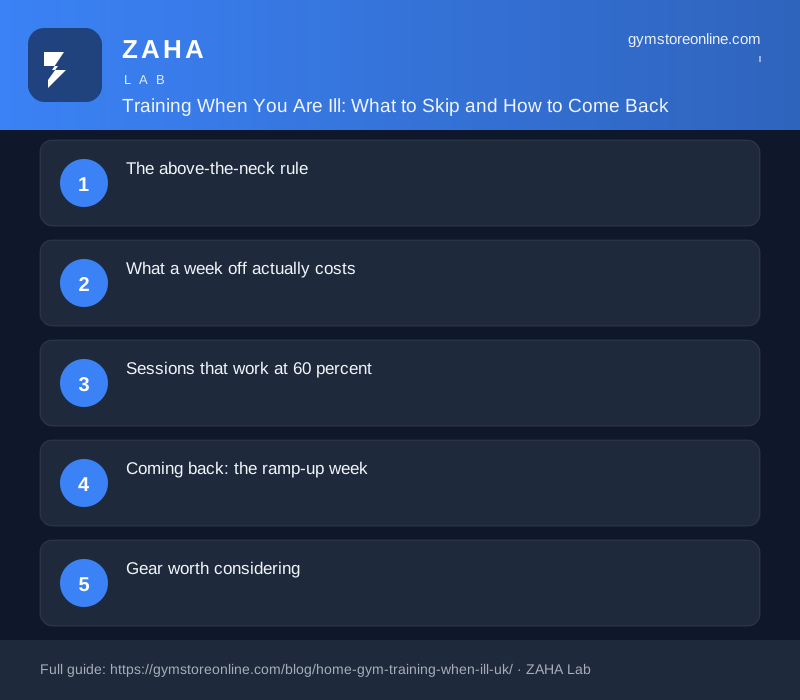
A mild head cold is not a reason to cancel your session. For most healthy adults doing home gym training when ill, the decision comes down to one thing: where the symptoms are sitting.
The above-the-neck rule
Runny nose, mild congestion, a scratchy throat with no temperature? You can usually train, at a noticeably lower intensity. Symptoms below the neck change the picture entirely. A fever above 37.5°C, a chesty cough, body aches, vomiting, or diarrhoea: stop. Training with a fever raises your core temperature further and places additional load on the cardiovascular system. It is not worth it. Rest, hydrate, and return only once the fever has been gone for at least 24 hours.
Flu is different from a cold. The sudden onset, aching limbs, fatigue that makes the kitchen feel far away: that is a full stop. No session, no "just some light stretching." Lie down.
What a week off actually costs
This is the part most people get wrong. Strength and muscle do not disappear quickly. Noticeable strength loss in trained adults typically begins after two to three weeks of complete inactivity, not one. Muscle loss takes longer still. A week off during illness will not undo months of consistent work.
Returning to full training after a short illness often feels harder than expected, partly because deconditioning has a psychological component alongside the physical one. The fitness comes back faster than it left. For context on structured planned downtime, the guide on deload weeks and when to back off covers how to reduce load without losing ground.
Sessions that work at 60 percent
If symptoms are mild and above the neck, the following session shapes keep you moving without digging a deeper hole:
- Easy walking: 20 to 30 minutes at a pace where you can hold a full conversation. No incline, no speed work.
- Mobility work: hip openers, thoracic rotation, ankle circles. No added load.
- Light resistance band work: banded glute bridges, pull-aparts, face pulls. Long rest periods, nothing taken to failure.
- Static stretching: floor-based holds of 30 to 60 seconds. A multi-loop stretching strap helps you reach the hamstrings and hip flexors without strain.
Skip the barbell. Skip HIIT. The goal during this period is to move enough to feel human, not to maintain fitness.
Coming back: the ramp-up week
The most common mistake is repeating the last session completed before the illness. If that was a heavy squat day, do not start there. Ramp load over five to seven days.
Day one back: 50 to 60 percent of your normal working weights, full movement patterns, shorter session. Day three: 70 to 75 percent. By day five to seven, you should be at normal load if you feel well throughout. Expect higher soreness than usual even at reduced intensity. That is normal. The recovery and mobility guide covers practical approaches to managing it.
If appetite has been poor, focus on protein before worrying about total calories. Greek yoghurt, scrambled eggs, and protein shakes are easier to get down than a full dinner. Aim for 1.2 to 1.6 g of protein per kilogram of bodyweight even on rest days. Hydration is non-negotiable: fever and mucus production both increase fluid losses.
For a shared home gym: wipe handles, benches, bands, and mat surfaces after every session using a 70 percent isopropyl alcohol spray. Wash hands before and after training. If you are genuinely ill, skip the session entirely. The Recovery category has further reading on rest-day nutrition and sleep-based recovery.
Gear worth considering
- Equipment floor mat for a treadmill or home gym area: protects hard floors, reduces vibration, and makes surface wiping easier when you are keeping the space hygienic.
- Resistance bands set: ideal for the low-intensity sessions that fit a reduced-load week, easy to disinfect between users.
- Multi-loop stretching strap: supports the mobility and flexibility work that suits a week at 60 percent without adding fatigue.
Frequently asked questions
Can I do a light workout with a cold?
If your symptoms are above the neck, a short low-intensity session is generally fine for healthy adults. Keep the intensity well below your usual level and cut the session short if you feel worse during it.
How long should I wait before training again after flu?
Wait until your temperature has been normal for at least 24 hours and you can walk briskly without feeling fatigued. Most people need three to seven days of genuine rest after a true flu before returning to structured training.
Will I lose muscle if I take a week off?
Meaningful muscle loss in trained adults typically requires more than two to three weeks of complete inactivity. A week off during illness is unlikely to cost you measurable muscle, and strength returns quickly once you ramp back up over the following week.