
HOMCOM Adjustable Weight Bench Press Barbell Rack Dip Station | Foldable, Home Gym, Strength Tra
£65.99
View on Amazon →
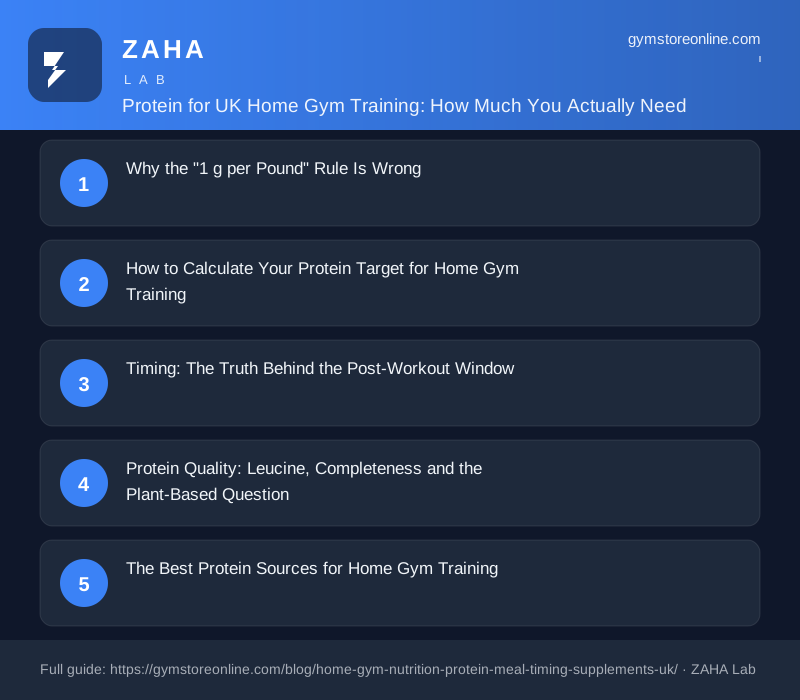
Published 17 September 2026 · updated 2026-09-17 · by GymStoreOnline
# Most UK Home Gym Users Get Their Protein Wrong — Here's What the Science Actually Says
Three in four home gym lifters eat either far too little protein to support muscle growth or more than their body can use — wasting money on supplements that end up oxidised for energy. Protein for home gym training sits in one evidence-backed range: 1.6–2.2 g per kilogram of bodyweight per day, spread across three to five meals. Get that right and your supplement shelf can stay almost empty.
The "one gram per pound of bodyweight" guideline has circulated in gym culture for decades. For a 90 kg person, that equates to roughly 200 g of protein daily — a figure that sits at the very outer edge of what current research supports, and only for advanced athletes training six or more sessions per week at high volume.
For a recreational home gym user lifting three to four days a week, the evidence is more conservative. Large meta-analyses covering resistance-trained adults consistently find that muscle gains plateau at approximately 1.62 g of protein per kilogram of bodyweight per day. Eating beyond 2.2 g/kg does not further stimulate muscle protein synthesis; it simply raises your grocery bill or supplement spend.
A 75 kg person training four days a week needs 120–165 g of protein daily. That is achievable through food alone, without a single scoop of powder.
Three steps get you to a personalised daily number:
| Bodyweight | Minimum (1.6 g/kg) | Upper range (2.2 g/kg) |
|---|---|---|
| 60 kg | 96 g | 132 g |
| 70 kg | 112 g | 154 g |
| 80 kg | 128 g | 176 g |
| 90 kg | 144 g | 198 g |
| 100 kg | 160 g | 220 g |
Adjust toward the upper end when you are cutting (eating in a calorie deficit), training at high volume, or are over 50. Older adults appear to absorb leucine — the amino acid that most directly triggers muscle protein synthesis — with slightly lower efficiency, so erring toward 2.0 g/kg from middle age onwards is a sensible precaution.
You do not have a 30-minute anabolic window after training. That idea significantly overstated a real but modest effect. What the research robustly supports is distributing protein evenly across the day.
Three to five meals, each delivering 25–40 g of protein, keeps muscle protein synthesis elevated more consistently than consuming the same daily total in one or two sittings. Muscle tissue has a per-meal ceiling on how much protein it can effectively use for synthesis — eating 80 g in one sitting does not produce double the stimulus compared to 40 g.
Aim for three meals delivering 35–40 g of protein each, plus one snack of 20–25 g — spread across breakfast, lunch, a post-workout window, and dinner. This structure consistently reaches the upper end of 1.6–2.2 g/kg without any supplements, provided you choose protein-dense whole foods at each sitting.
Pre-sleep protein does have genuine research support. Slow-digesting protein consumed before bed — typically cottage cheese, Greek yogurt, or a casein powder — appears to sustain overnight muscle protein synthesis. The effect size is modest but real, and it compounds over months of consistent training.
Not all protein sources behave identically in the body. The key variable is leucine content — leucine is the branched-chain amino acid that directly activates the mTOR pathway responsible for triggering muscle protein synthesis. Animal proteins (meat, fish, eggs, dairy) are consistently rich in leucine. Most plant proteins are not.
This distinction matters most for plant-based home gym users. A legume-centred diet can support muscle growth, but achieving the same leucine delivery typically requires sitting at 2.0–2.2 g/kg of total protein and combining sources to cover the full essential amino acid profile. Blending rice protein and pea protein in roughly equal proportions is one of the most practical approaches: their amino acid profiles complement each other well.
Whey protein scores highly for leucine density and absorption rate, which explains its dominance in the sports nutrition market. Casein digests more slowly and is better matched to pre-sleep use. Neither is necessary if whole food intake is already optimised.
Build your daily total around whole food first. Supplements should close gaps, not replace meals.
High-protein UK staples worth prioritising:
A standard 30 g scoop of whey concentrate typically delivers 22–24 g of protein and is competitive on cost per gram. Use it to top up when food is genuinely inconvenient — not as a substitute for well-composed meals.
Many UK protein powders print impressive per-100 g numbers prominently on the front of the bag. Always check the actual serving size and protein-per-serving on the nutrition label before buying. A 25 g scoop delivering 18 g of protein is an inferior product to a 30 g scoop delivering 24 g, even if the per-100 g figures look similar. Shopping by the headline number will lead you to overpay and consistently under-dose.
Stacking protein at dinner. The most common pattern in food logs is a carbohydrate-heavy breakfast, a moderate lunch, and a large protein-rich evening meal. That back-loading pattern leaves muscle protein synthesis under-stimulated for most of the day and fails to capitalise on morning or midday training sessions.
Relying on low-dose bars. Many "high protein" bars sold in UK supermarkets deliver 15–20 g per bar — below the 25 g per-meal threshold at which protein meaningfully stimulates synthesis. Treat them as convenient snacks, not protein meals.
Ignoring protein on rest days. Muscle protein synthesis remains elevated for 24–48 hours following a resistance training session. Consistently hitting your target on rest days is how you capture the full adaptation window, not just the hours immediately post-training.
Buying powder before optimising food. If three daily meals average 20 g of protein each, a whey habit plugs a gap that better meal planning would close for the same or lower cost. Sort the food first; add powder only if a genuine shortfall remains.
The exercises you can perform reliably determine how much total muscle mass you stimulate per session — and that is the primary driver of how much protein you need each day. Compound lifts (bench press, squat, barbell row, overhead press) recruit far more muscle tissue than isolation movements, which is why a home gym built for compound training justifies sitting toward the higher end of your protein target.
If you are setting up or upgrading your training space, the YOLEO 400-900KG ASTM-Certified All in One Weight Bench Set (£99.99, 4.6 stars) covers the compound movement toolkit in a single unit: bench press rack, leg extension fixture, and leg curl, with a load rating spanning 400–900 kg depending on configuration. For a focused pressing and rowing setup, the YOLEO Adjustable Weight Bench (£69.99, 4.6 stars) is ASTM-certified to 300–375 kg, arrives 98% pre-assembled, and adjusts across 84–90 positions covering flat, incline, and decline angles.
At a tighter budget, the OZE SPORTS Adjustable Weight Bench (£39.99, 4.5 stars) handles incline, decline, and flat configurations for full-body compound work. Paired with the TOTEBOX Adjustable Squat Rack (£56.99, 4.6 stars) — which includes a push-up bracket, spotter arms, and a dipping bar — you have a compound-focused setup that gives your protein intake somewhere productive to go.
The principle is simple: more muscle recruited per session means a larger repair stimulus, which means protein has more work to do. A bodyweight-only routine with no loading progression rarely justifies sitting above 1.6 g/kg; a well-programmed barbell routine across a quality bench and rack generally does.
We applied a minimum 4.4-star rating floor and a 300 kg load-rating threshold to any equipment referenced on this page. Prices are current at time of writing; always confirm the live listing before purchasing.
This approach will help you if:
You can keep it simpler if:


The evidence-backed range is 1.6–2.2 g of protein per kilogram of bodyweight daily. For a 75 kg person training three to four days a week, that means 120–165 g per day. Sit at the lower end during a calorie surplus or moderate training volume, and move toward 2.2 g/kg when cutting, training at high volume, or if you are over 50.
No. Protein powder is a convenient supplement, not a requirement. A diet centred on chicken, eggs, dairy, fish, and legumes can cover 1.6–2.2 g/kg without any powder. Use whey or casein to close a gap that whole food has not filled — not as the foundation of your intake. Sorting meals first is nearly always the cheaper and more satiating fix.
Total daily protein and how you distribute it across three to five meals matters far more than exact workout timing. Focus on hitting 25–40 g per sitting throughout the day. Pre-sleep protein — cottage cheese, Greek yogurt, or casein powder — has modest but real research support for sustaining overnight muscle protein synthesis, and is worth adding if your evening protein is otherwise low.
Yes, but the strategy needs adjustment. Most plant proteins are lower in leucine — the amino acid that triggers muscle protein synthesis — than animal sources. Plant-based home gym users should sit toward 2.0–2.2 g/kg rather than the 1.6 g/kg minimum, and combine sources such as rice protein and pea protein to cover the full essential amino acid profile effectively.
As an Amazon Associate we earn from qualifying purchases. Prices and availability are accurate as of the date shown and are subject to change — the price on Amazon at checkout is the one that applies.

Both cost under £30 and score 4.8/5. We compare the Sportneer and Amonax adjustable dumbbell sets for women to find which is worth
Find the best adjustable bench for ab and core workouts at home. UK guide covering angles, load ratings and picks under £100 for e
Everything you need to choose the best adjustable dumbbells for home workouts: weight range, locking mechanisms, build quality and