Training at Home Through a UK Winter: Cold-Weather Workouts That Still Progress
A cold garage in January can sit below 5°C, pushing warm-up time to 12 minutes before the first loaded set is safe. Home gym cold-weather winter training is entirely achievable, but it requires adjusting your approach to warm-up length, grip on cold equipment, and how you store kit between sessions.
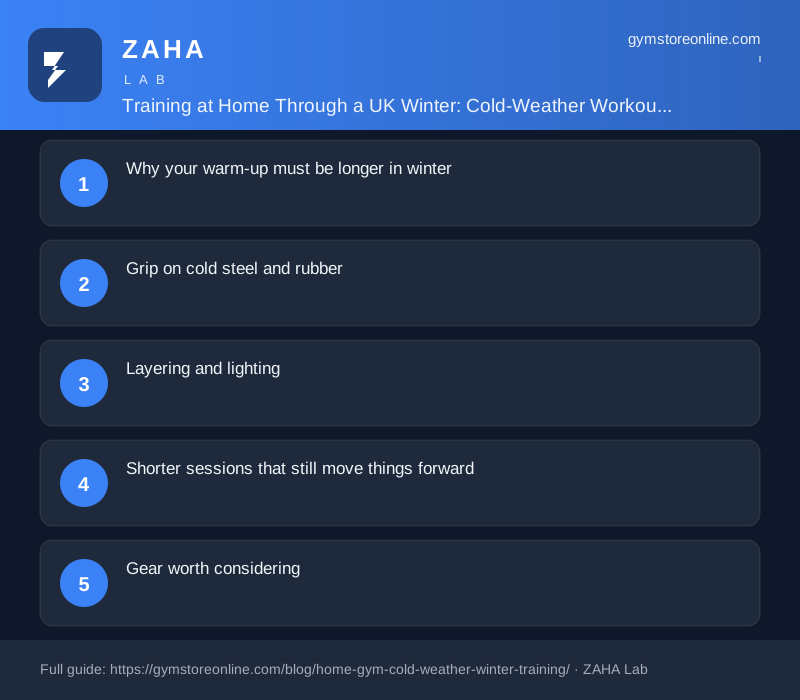
Why your warm-up must be longer in winter
Muscle tissue is less pliable at low temperatures, and connective tissue takes longer to respond to movement than in a heated room. Five minutes is not enough when the room is at 5°C. Plan for at least 12–15 minutes of progressive movement before loading anything: joint circles, bodyweight squats, arm swings and a short skipping circuit. The warm-up and cool-down guide covers how to structure this across the full training year.
Grip on cold steel and rubber
Metal gets slippery with condensation. Barbell knurling that bites well at room temperature can feel strangely smooth after sitting in a 4°C garage overnight. Bringing steel equipment inside for ten minutes before your session helps considerably, or you can wrap handles in a dry cloth for the first few sets.
Resistance bands lose a small amount of elasticity in cold conditions, which alters how the load feels. Check your bands for micro-cracks before each winter session, as cold accelerates surface degradation on latex. Weight lifting gloves with wrist wrap address two things at once: grip on cold metal and a warmer wrist joint during heavier sets.
Layering and lighting
Starting in a heavy sweatshirt means being soaked through by set three. A better approach: begin in a synthetic base layer and a zip-up fleece, remove the outer layer after the warm-up, then add it back during rest periods. Synthetic fabrics dry faster than cotton and keep sweat from sitting against the skin.
Most UK adults training at home will do it in the dark from October to March. A clip-on LED work light at 1000 lumens, available at most DIY retailers for around £12–20, pointed at the ceiling gives even ambient light without harsh shadows. For early-morning sessions, a daylight bulb rated 5000–6500K reduces the sluggishness many people notice before 8 am in winter. An extra-thick 10 mm exercise mat also adds meaningful insulation from a cold concrete floor, which pulls heat away from your feet and joints throughout the session.
Shorter sessions that still move things forward
A 35-minute session done well beats a 60-minute one where focus drops after 25 minutes because the room is uncomfortable. Winter suits a density approach: more work in less time, compound movements first, shorter rest periods. Progress does not stop in winter.
A weighted jump rope raises core temperature fast in a small space, making it a practical choice for the first few minutes of any cold-room session. A resistance bands set works well for shorter accessory circuits and stores flat between sessions. For help with the physical setup of your cold-weather training space, the garage gym damp and cold guide covers condensation and ventilation in detail.
Gear worth considering
- Extra-thick 10 mm exercise mat: insulates from cold concrete and provides grip underfoot on slippery floors.
- Weight lifting gloves with wrist wrap: improves grip on cold metal bars and supports the wrist during heavy lifts.
- Weighted jump rope: a fast warm-up tool that works in the tightest of spaces.
- Resistance bands set: less affected by cold than free weights and useful for mobility and accessory circuits.
Browse the full range of Fitness Accessories on GymStoreOnline.com.
Mats and bands do not last well with extended exposure to cold and damp. Roll mats vertically and store them away from exterior walls, where condensation collects. Hang resistance bands rather than leaving them coiled on a cold floor. Cables left damp overnight corrode faster than most people expect, so a dry cloth wipe of any metal hardware after each session is worth doing.
A small dehumidifier, 600 ml capacity or larger, running in a garage training space for a few hours each week makes a real difference to both the comfort of the space and the lifespan of foam and rubber equipment.
Frequently asked questions
How long should a warm-up be in a cold garage?
In a space below 10°C, 12–15 minutes of progressive movement is a reasonable minimum before loading. That means joint circles, bodyweight work and a few minutes of continuous movement to raise your heart rate, not just a standing stretch.
Can resistance bands break in cold weather?
Cold makes latex more brittle, accelerating micro-cracks on the surface. Inspecting bands before each session and storing them away from the cold floor adds months to their working life.
Is it safe to exercise in an unheated garage in winter?
Training in a cold, dry space is generally fine for healthy adults, provided the warm-up is long enough. The main risk is rushing the warm-up when the room is uncomfortable. Damp adds a separate set of problems covered in the garage gym damp and cold guide.