
FK Sports Adjustable Squat Rack & Weight Bench Set – Heavy Duty Home Gym Equipment, Multi-Functi
£125.99
View on Amazon →
Published 17 September 2026 · updated 2026-09-17 · by GymStoreOnline
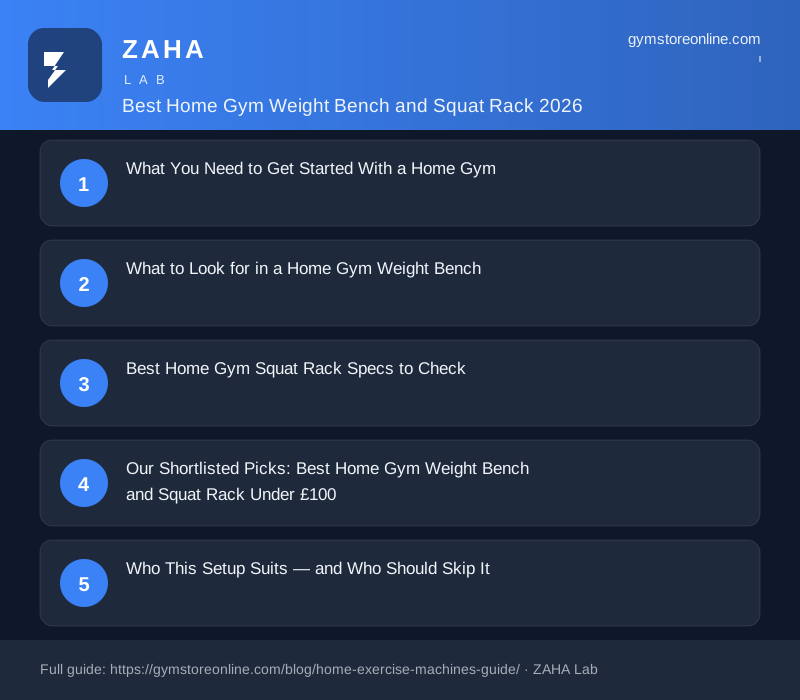
You don't need a room full of machines to build serious strength. A home gym weight bench and squat rack covers the four main compound lifts — and quality setups start under £100.
For a complete home training station, combine an ASTM-certified adjustable bench rated to at least 300 kg with a heavy-duty squat rack that includes spotter arms. The sections below explain which specs actually matter, which setups to shortlist, and what to check before your first loaded session.
The working foundation is two items:
A barbell and weight plates are sold separately; factor those into your total budget before deciding how much to spend on the frame and bench.
What about multi-gyms and cable machines? Multi-gyms bundle a pulley stack, lat pulldown, leg press, and bench press station into one frame. They suit people who prefer guided resistance over free weights, but they require more floor space — often 2 × 1.5 m or more — and cost considerably more for equivalent build quality. Cable-only machines (functional trainers) are excellent for rotational strength, rehabilitation, and sport-specific exercises, but are a secondary addition rather than a foundation. For most home lifters aiming to build strength efficiently, a barbell-and-bench setup delivers more capability per square metre and per pound of budget.
The load rating is the total weight the bench is certified to hold — your bodyweight plus the bar plus the plates. A 90 kg lifter pressing 80 kg needs a bench rated to at least 200 kg; aim for 300 kg or more to have safe headroom as your strength progresses. The YOLEO Adjustable Weight Bench (£69.99) carries an ASTM-certified 300–375 kg rating, meaning the figure comes from third-party lab testing rather than a brand declaration.
ASTM International is a recognised standards body. An ASTM-certified bench has been independently tested to its stated load; a bench that simply lists a capacity figure without referencing a test standard has not. This distinction matters most when you train alone — the bench is the only barrier between a completed lift and a dropped bar on your chest.
A three-position bench (flat, one incline, one decline) covers the basics for most beginners. For finer control — different chest angles across press variations, or the exact seated incline that suits your shoulder anatomy — more positions help. The YOLEO range offers 84–90 positions across its models, which removes the compromises of a basic three-position design. The same brand's all-in-one bench and rack set (£99.99) combines the bench, a press rack, and a leg extension and curl station in a single ASTM-certified frame rated to 400–900 kg.
A wider seat reduces lateral roll when pressing a heavy loaded bar. Aim for at least 25 cm. The foldable weight bench in this shortlist specifies a 74.5 cm-wide seat — substantially wider than many benches in this price band, which adds real stability under load.
For smaller spaces, fold-flat benches are worth prioritising. The OZE SPORTS Adjustable Weight Bench (£39.99) covers incline, decline, and flat in a foldable frame — the lowest price on this list, and a practical starting point before committing more budget to a permanent setup.
Product listings show a compact folded footprint. Confirm the unfolded length — typically 120–130 cm — and check you have clear space at both ends to get under and out from a loaded bar without obstruction. A cramped setup is a safety problem, not just an inconvenience.
Rack capacity ranges from around 100 kg on lightweight stands to 500 kg or more on power cage frames. For most home lifters squatting under 140 kg, a rack rated to 200–400 kg provides more than adequate headroom with room to progress.
Spotter arms are safety catches that hold the bar if you miss a rep. Without a training partner, they are non-negotiable. The TOTEBOX Adjustable Squat Rack (£56.99) includes spotter arms, a push-up bracket, and a dipping bar as standard — one of the more complete multi-function packages at this price, rated 4.6 stars.
J-hooks cradle the barbell at the start of each lift. They need to sit at the correct height for your build and for the movement you are performing. Look for a range covering at least 85–160 cm across multiple positions with no large gaps between settings.
Some racks include a dip station, chin-up bar, or cable attachment. The Yaheetech Adjustable Squat Rack (£49.98) bundles a dip station and bench support in a single frame — useful when floor space is limited and you want both compound barbell work and bodyweight exercises without buying separate equipment.
Attempting a near-maximal bench press or squat alone, without a power cage or correctly positioned spotter arms, is a leading cause of serious home gym injury. If your rack does not include them as standard, purchase direct-fit spotter arms before your first heavy session. Most manufacturers sell them as a compatible accessory, and the cost is trivial relative to the risk they eliminate.
| Product | Load Rating | Standout Feature | Price |
|---|---|---|---|
| YOLEO Adjustable Weight Bench | 300–375 kg (ASTM) | 84–90 angle positions, 98% pre-assembled | £69.99 |
| YOLEO All-in-One Bench Set | 400–900 kg (ASTM) | Bench + rack + leg extension/curl | £99.99 |
| TOTEBOX Adjustable Squat Rack | — | Spotter arms, dip station, push-up bracket | £56.99 |
| Yaheetech Adjustable Squat Rack | — | Dip station and bench support | £49.98 |
| OZE SPORTS Adjustable Bench | — | Foldable, incline/decline/flat | £39.99 |
The YOLEO All-in-One Weight Bench Set (£99.99) is the most complete single purchase on this list. ASTM-certified to 400–900 kg, it combines a bench, a barbell rack, and a leg extension and curl fixture, removing the need to source a separate rack. For most people building a first home gym on a budget, it comes closest to a complete strength station under £100.
If you prefer to keep components separate — to reconfigure the space or replace one piece independently — the TOTEBOX Adjustable Squat Rack (£56.99) pairs well with either standalone bench in this shortlist.
Note that the squat racks in this table do not list ASTM or equivalent certification. This does not mean they are unsafe, but the stated load figures are brand-declared rather than independently tested. Check the current product listing for any certification updates before purchasing.
This kit suits you if:
Consider alternatives if:
We applied four criteria to build this shortlist:
Products that listed a load capacity without referencing a test standard were included where other features were strong, but noted in the commentary above.


Most manufacturers recommend anchoring a freestanding squat rack once you are lifting close to or above your own bodyweight. An unanchored rack can tip or shift under uneven load, particularly on smooth floors. Wedge-mount anchors work well on concrete; use rated lag bolts into solid timber joists for wooden floors. Always check the assembly instructions for the manufacturer's specific guidance before your first loaded session.
Add your bodyweight to the maximum bar-plus-plates weight you plan to lift, then look for a bench rated well above that total. A 90 kg lifter pressing 80 kg generates 170 kg of combined load; a bench rated to 300 kg provides meaningful safety headroom. For progressive lifting, prioritise ASTM-certified benches where the rated capacity has been independently verified rather than self-declared by the manufacturer.
Yes, for most home lifters. ASTM certification means the bench has passed independent load testing — the capacity figure is not a brand claim. The price difference is modest: the YOLEO Adjustable Weight Bench at £69.99 carries ASTM certification to 300–375 kg, a small premium over non-certified alternatives at similar prices. If you train alone without a spotter, that independent verification adds meaningful reassurance when you are under a loaded bar.
Yes, with dumbbells or a barbell you can load from the floor. However, a heavy barbell bench press requires a rack to unrack and re-rack safely — lifting a fully loaded bar from the floor to a pressing position becomes impractical and risky above around 40–50 kg. Most beginners start with dumbbells on an adjustable bench and add a squat rack once the weights outgrow what they can safely manage unassisted.
As an Amazon Associate we earn from qualifying purchases. Prices and availability are accurate as of the date shown and are subject to change — the price on Amazon at checkout is the one that applies.

Both cost under £30 and score 4.8/5. We compare the Sportneer and Amonax adjustable dumbbell sets for women to find which is worth
Find the best adjustable bench for ab and core workouts at home. UK guide covering angles, load ratings and picks under £100 for e
Everything you need to choose the best adjustable dumbbells for home workouts: weight range, locking mechanisms, build quality and