Rust on Barbells and Weight Plates: How to Stop It in a UK Garage Gym
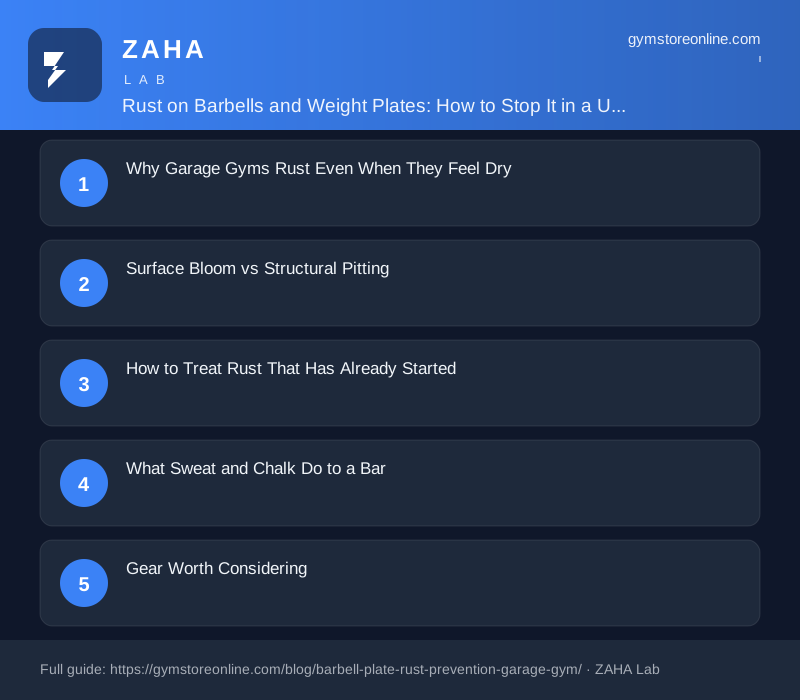
Concrete floors pull heat from cast iron faster than ambient air replaces it. That temperature gap is the real cause of barbell plate rust in a UK garage gym: not leaks, not neglect, but condensation forming on cold metal surfaces across repeated overnight cycles.
Why Garage Gyms Rust Even When They Feel Dry
UK garages cycle through wide temperature swings. A bare-steel bar stored near floor level can drop to near the concrete temperature overnight, sometimes several degrees below the dew point of the humid morning air that replaces it. Water condenses directly on the metal, invisible at first but cumulative. Cast iron plates absorb this poorly because their surface is porous at a microscopic level. Rubber-coated or vinyl plates resist it: the coating interrupts direct metal-to-air contact.
Getting plates off the floor and keeping airflow across stored bars breaks the cycle without any specialist equipment. A relative humidity below 50% is a reasonable target. A basic hygrometer costs roughly £8 to £12 and tells you whether ventilation alone achieves it.
Surface Bloom vs Structural Pitting
Orange-brown surface rust on a plate or bar sleeve is common and mostly cosmetic. It sits on top of the metal, wipes away cleanly, and leaves the steel underneath intact. Pitting is different: the rust has worked into the metal itself, leaving small craters that cannot be polished out.
On a bar, check the knurling and sleeves. Knurling that feels smooth where it should be sharp, or a sleeve with raised flakes and soft grey metal beneath them, indicates structural damage. Plates with pitting on the collar holes can create uneven loading over time. A plate that has lost more than 2 mm of collar-hole diameter to corrosion is worth retiring.
How to Treat Rust That Has Already Started
Light surface rust responds to a stiff nylon brush, followed by a fine wire or brass brush, then a coat of 3-in-1 oil wiped on with a cloth. For heavier rust on plate faces, a phosphoric acid-based inhibitor such as Jenolite or Hammerite Kurust converts iron oxide to a stable phosphate layer. Apply it, leave for the manufacturer's stated time, wipe clean, and re-oil.
If a plate or bar needs repainting after treatment, use a single-part oil-based enamel or purpose-made cast iron paint. Avoid aerosol paint on knurling: it fills the grip diamonds and reduces traction. On bar knurling, a monthly wipe with WD-40 Specialist Long-Term Corrosion Inhibitor works well. Standard WD-40 evaporates within a day and leaves little protection. Bar sleeves benefit from a thin layer of bearing grease on the internal bushing.
What Sweat and Chalk Do to a Bar
Chalk (magnesium carbonate) is hygroscopic. Left in the knurling after a session, it draws moisture from the air and holds condensation against the steel for hours. Sweat compounds this: it contains sodium chloride, which accelerates electrochemical corrosion. A dry cloth wipe after every session takes under 60 seconds. A nylon brush along the knurling once a week clears embedded chalk. Both habits do more for bar longevity than any protective coating applied occasionally.
Gear Worth Considering
For long-term corrosion resistance in a damp space, the type of plate matters as much as the maintenance routine. The full range is available in Strength Training Equipment on GymStoreOnline.
- NORTHERN Olympic tri-grip rubber weight plates (2.5 kg to 20 kg): rubber coating on cast iron reduces direct metal-to-air contact, making condensation cycles far less damaging than bare plates. The tri-grip design also keeps plates off the floor when stacked flat.
- KK vinyl 1-inch weight plate set: a practical option for standard bars in smaller spaces. Vinyl coating protects the cast iron core, though collar holes should still be dried periodically after use.
- Centra heavy-duty steel weight plate rack: getting plates off concrete is one of the most effective single steps against condensation contact. A dedicated rack also improves airflow between plates during storage.
A 10-Minute Monthly Check Routine
Once a month, run through these steps:
- Inspect bar sleeves for orange bloom or lifting paint. Wipe and re-oil if needed.
- Check collar holes on all plates for pitting or loose flakes.
- Run a finger along bar knurling. It should feel sharp, not smooth or gritty with chalk residue.
- Read the hygrometer. Above 55% relative humidity consistently, add ventilation or a small desiccant dehumidifier.
- Check the underside of any plate stored flat. That face gets the least airflow and rusts first.
Seized sleeve spin and cracks near the sleeve weld are signs a bar should be retired rather than cleaned. So is knurling that has become uniformly flat across the entire bar. These faults are loading risks under heavy weight, not maintenance problems.
For more on choosing between plate types for a damp space, see the guide to bumper plates vs cast iron. For broader advice on UK garage gym setup, the garage gym damp and cold guide covers insulation, flooring, and ventilation in detail.
Frequently Asked Questions
What relative humidity should a garage gym stay below?
Aim to keep relative humidity below 50% if possible. Above 60% consistently, bare steel and cast iron will develop surface rust within weeks. A basic hygrometer shows the current level; opening a vent or door for an hour after training often brings it down noticeably.
Is standard WD-40 good enough to protect a barbell?
Standard WD-40 is a water displacer, not a long-term rust preventative. It evaporates within a day or two, leaving very little protective film. WD-40 Specialist Long-Term Corrosion Inhibitor, 3-in-1 oil, or food-grade mineral oil are all better choices for monthly bar maintenance.
When should surface rust mean retiring a bar rather than cleaning it?
Surface rust that wipes off cleanly and leaves smooth steel beneath is safe to clean and continue using. Retire a bar if the sleeves no longer spin, if there are cracks near the sleeve weld, or if the knurling is uniformly flat along the full bar length. A plate with visible pitting in the collar hole that changes the fit on the sleeve should also be replaced.